 ⭐⭐⭐⭐
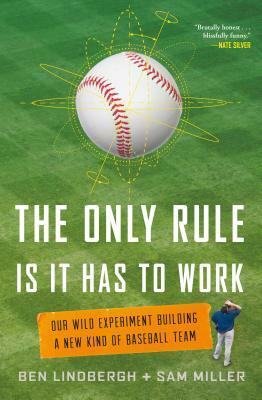
⭐⭐⭐⭐ Ben Lindbergh and Sam Miller, writers for Baseball Prospectus,
got the opportunity to help run an unaffiliated baseball team
(basically three levels below even the lowest affiliated minor league
team), trying to test whether they could use analytics to help propel
the team to greatness.
As an Orioles fan in the year of our Lord 2026, there were times that reading this was positively cathartic. I've read so many rants on fan sites/comments about how bad analytics are and how using computers has messed with baseball and something something fundamentals blah blah old man yelling at the sky. (Ignoring things like how Earl Weaver was essentially using analytics when he set up his famous platoons, but because it didn't come from computers, it's different. Because reasons.) So reading about Ben and Sam sparring with the team's manager(s) about tweaking the lineup was just incredibly relatable. So you get exchanges like
As an Orioles fan in the year of our Lord 2026, there were times that reading this was positively cathartic. I've read so many rants on fan sites/comments about how bad analytics are and how using computers has messed with baseball and something something fundamentals blah blah old man yelling at the sky. (Ignoring things like how Earl Weaver was essentially using analytics when he set up his famous platoons, but because it didn't come from computers, it's different. Because reasons.) So reading about Ben and Sam sparring with the team's manager(s) about tweaking the lineup was just incredibly relatable. So you get exchanges like
"That's what I'm saying: You can't just go off numbers," [manager] Feh counters. "You're saying he hasn't pitched good, but he might not have been put in a position to get a chance to do what he's capable of." (p. 38)
and messages from the manager like
I hear what you're saying but it's never a good idea to make changes just because a few games don't go our way. The message it sends are that I am panicking, and I am not because I know there are stretches where things go your way, and there are stretches where they don't. You can't give up on a guy cause he has a rough week. Maybe a little later.
with the rumination "If you can't make changes when you're winning or when you're losing, when is it safe to make them?" (p. 200).
Ben and Sam never try to hit the players over the head with the numbers; instead, they wanted everyone to know that they had information (more information than most even minor league players had at the time, as they used their connections to have pitch tracking installed and had volunteers scouting the three other teams in the league): "We wanted to win them over, not overwhelm them or argue them into submission" (p. 244).
It was interesting reading about the issues of trying to create an analytics-based team from the beginning. Because the team is so far down the pipeline from the majors, most decent players weren't available. It's hard to find players who can play for basically nothing, but the lure of playing professional baseball--even at that level--is a strong one.
Ben and Sam never try to hit the players over the head with the numbers; instead, they wanted everyone to know that they had information (more information than most even minor league players had at the time, as they used their connections to have pitch tracking installed and had volunteers scouting the three other teams in the league): "We wanted to win them over, not overwhelm them or argue them into submission" (p. 244).
It was interesting reading about the issues of trying to create an analytics-based team from the beginning. Because the team is so far down the pipeline from the majors, most decent players weren't available. It's hard to find players who can play for basically nothing, but the lure of playing professional baseball--even at that level--is a strong one.
Can a creative, incisive use of numbers really sharpen the performance of players who've never been able to fulfill their major league dreams? Can we become as proficient at analyzing players' personalities as we are at analyzing their stats? Or will the game's human elements build barriers that we'll be too out of our element to break down? (p. 28)
Ben
and Sam delve into the intricacies of clubhouse politics and how fault
lines can divide: old vs. young, players who speak different languages,
rich vs. players making league minimum. One of their challenges building
the roster where they did is that players came on the recommendations
of other players, creating additional cliques on the team. Which is
something hard to control for when looking at a spreadsheet.
At the end of the day, particularly after a frustrating loss, sentiments like "All of the things are dumb" (p. 348) are just completely relatable. And sometimes it's nice to read about that in a book. Also, this: "'I like all these guys,' I say. 'I'm a sucker. I want to hug them all. I want all their dreams to come true. They all have problems and they're all great.'" (p. 102) That's honestly how I feel about the Orioles. I am definitely a sucker who just wants them to be happy and do well.
Ben and Sam do a good job arguing for the benefits of analytics-based team management. They got to do some fun stuff with shifts (RIP shifts), they had to fight their managers about bullpen usage, they speculated about using a randomizer to pick pitches (while acknowledging it could never actually work). It was frustrating reading about their roadblocks, but was a great look into low-level professional baseball.
Sometimes they go into a bit too much detail when recounting games, and it's very hard to keep all the players straight. But there are some players who stick with you and you, like the authors, can't help but love these guys. And you can tell that Ben and Sam come from writing backgrounds, as the prose itself is entertaining throughout. So I'll say I recommend this for baseball fans and end with some summation quotes from the book:
At the end of the day, particularly after a frustrating loss, sentiments like "All of the things are dumb" (p. 348) are just completely relatable. And sometimes it's nice to read about that in a book. Also, this: "'I like all these guys,' I say. 'I'm a sucker. I want to hug them all. I want all their dreams to come true. They all have problems and they're all great.'" (p. 102) That's honestly how I feel about the Orioles. I am definitely a sucker who just wants them to be happy and do well.
Ben and Sam do a good job arguing for the benefits of analytics-based team management. They got to do some fun stuff with shifts (RIP shifts), they had to fight their managers about bullpen usage, they speculated about using a randomizer to pick pitches (while acknowledging it could never actually work). It was frustrating reading about their roadblocks, but was a great look into low-level professional baseball.
Sometimes they go into a bit too much detail when recounting games, and it's very hard to keep all the players straight. But there are some players who stick with you and you, like the authors, can't help but love these guys. And you can tell that Ben and Sam come from writing backgrounds, as the prose itself is entertaining throughout. So I'll say I recommend this for baseball fans and end with some summation quotes from the book:
The other guy lives in a big house, too. Not all failure corresponds to a lack of effort. Or a lack of desire. Or a lack of preparation. Or a lack of skill. We lose, sometimes, because the other guy is also really good. (p. 301)
We haven't lost our belief that data can help people build better baseball teams. We've just gained a greater appreciation for how hard it can be to collect and communicate. (p. 350)
ultimately the last stage of every decision--even data-driven decisions--is the gut. Our data could get us only so far, and even we knew that to get from a spreadsheet to the decision on the field meant weighing the situation and taking a leap. Ben and I could look at the same data and come to two different conclusions; so, too, could [manager] Yoshi. Our guts diverged. (p. 359)
And if the stats insist that someone can play, we won't rule him out based on body type, facial structure, or fastball speed. We're the Ellis Island of the indy leagues. Give us your small, your soft-throwing, your huddled middle infielders yearning to play for (almost) free. (p. 70)


No comments:
Post a Comment