Friday, August 28, 2026

Christmas magic, but make it messy

⭐⭐⭐ 

I'm still not entirely sure how I feel about Pining for You by Stef Ferrari. Bennie is a high school senior who works at...some sort of Christmas tree-type emporium in Connecticut. She encounters Eve, who lives in Brooklyn, and she and her friends decide to go into the city to try to find her so Bennie can capitalize on Christmas magic and have her first kiss.

That description makes it sound a lot lighter than it is. Bennie and her friends are pretty much all dealing with fairly weighty issues--as is Eve. It's pretty much all family issues, but Bennie and her friends are also facing down the end of high school and all of the change that comes with that. It's a hard, transitional time of life, to be sure. But that's all heavier than the Hallmark Christmas movie description makes it out to be.

The story itself is pretty cute, and I enjoyed Bennie's group of friends and how much they were there for each other. (I didn't need as much explicit "We're a found family, yay!" exposition as there was, but this is YA, so I should probably give it a pass.) Bennie herself could be a bit annoying at times, though in a way that was fairly realistic for a teenager from Connecticut. She wants to go to film school and so keeps recording on a Camcorder as the group traipses about New York, but doesn't realize that not everyone wants to be recorded and is hurt when she's told so. I could also very much relate to her frustration at not being able to participate in a number of her normal Christmas traditions--because this is a Hallmark-esque story (Bennie's goal is to make queer Christmas rom-coms), Bennie is all about the magic of Christmas, and throughout the book has to confront that not everything is magical, that Christmas can be hard for people. She also finds Christmas magic in unexpected places and moments, so it does even out.

Also, Bennie and Eve's relationship is great (though the third act crisis seemed...off). As someone who also had my first kiss later than many others (though my friends were never this invested in making sure I got it), I could relate to Bennie's feelings about it.

Unfortunately, I wasn't particularly enamored of Ferrari's writing; I'm not sure whether it was trying to sound Zoomer or what, but it was a bit cringe-inducing to me, a Xennial. At times, it was a bit of a slog, oddly enough, and there were chunks I wound up skipping--particularly at the end, where there was a multi-page speech spelling out the lessons of the book. Good for Bennie for learning them, and I guess theoretically young people reading the book might need them spelled out, but it felt a bit like it was underestimating the audience.

Still, would 100% watch the tv movie adaptation. And as such, I'll include my Hallmark movie checklists.

Trope(s):
    Royalty
    Alternate reality
    Small town ✔
    Fake relationship
    Family business getting sold/going bankrupt 
    Enemies-to-lovers
    Best friends-to-lovers
    Second chance
    Stranded 

Meet Cute: 
Eve and her Christmas Carol-obsessed younger brother show up at the Christmas place in Connecticut where Bennie works. Bennie's trying to get a tree to surprise her mother with, but is entranced enough to spend some time getting to know Eve. But she gets called off before getting Eve's contact info; she's just left with a few snippets of information and some cookies from Eve's family's bakery.

Rundown:
    Dead parents 
    Montage(s)
    Christmas-related name(s) 
    Animals
    Returns to hometown
    Is Santa a character? 
        Secretly or overtly?
    Cookie baking 
    Tree decorating 
    Somebody hates Christmas
    Christmas festival in a small town 
    A literal competition 
    Child plays matchmaker
    All work, no romance/life 

    Kiss before the end of the movie 
    Interrupted kiss 
    Flashback to childhood
    The leads literally run into each other
    Gratuitous shirtless scene
    Big Secret
    Wacky misunderstanding
    Just. Talk. To. Each. Other. 
    Someone pushing the leads together 
    Real family = chaos / bad families = cold and not chaotic
    Learns the meaning of Christmas
    Stranded by snowstorm 

    Hot chocolate 
    Ice skating 
    D-list celebrity
    Enemy-to-friend storyline
    The love interest is an ex
    Career change
    Lying to each other
    Tries to apologize, but keeps getting cut off

    Christmas pageant 

    End with a flash-forward

Thank you to Simon and Schuster Children’s Publishing for providing this book for review consideration via NetGalley. All opinions are my own.  

Tuesday, August 18, 2026

Baseball is dumb, but I can't help but love it

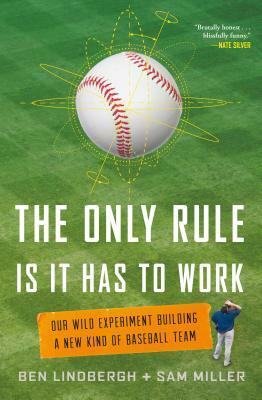
The Only Rule Is It Has to Work: Our Wild Experiment Building a New Kind of Baseball Team by Ben Lindbergh, Sam Miller⭐⭐⭐⭐ 
 
Ben Lindbergh and Sam Miller, writers for Baseball Prospectus, got the opportunity to help run an unaffiliated baseball team (basically three levels below even the lowest affiliated minor league team), trying to test whether they could use analytics to help propel the team to greatness.

As an Orioles fan in the year of our Lord 2026, there were times that reading this was positively cathartic. I've read so many rants on fan sites/comments about how bad analytics are and how using computers has messed with baseball and something something fundamentals blah blah old man yelling at the sky. (Ignoring things like how Earl Weaver was essentially using analytics when he set up his famous platoons, but because it didn't come from computers, it's different. Because reasons.) So reading about Ben and Sam sparring with the team's manager(s) about tweaking the lineup was just incredibly relatable. So you get exchanges like
"That's what I'm saying: You can't just go off numbers," [manager] Feh counters. "You're saying he hasn't pitched good, but he might not have been put in a position to get a chance to do what he's capable of." (p. 38)
and messages from the manager like
I hear what you're saying but it's never a good idea to make changes just because a few games don't go our way. The message it sends are that I am panicking, and I am not because I know there are stretches where things go your way, and there are stretches where they don't. You can't give up on a guy cause he has a rough week. Maybe a little later.
with the rumination "If you can't make changes when you're winning or when you're losing, when is it safe to make them?" (p. 200).

Ben and Sam never try to hit the players over the head with the numbers; instead, they wanted everyone to know that they had information (more information than most even minor league players had at the time, as they used their connections to have pitch tracking installed and had volunteers scouting the three other teams in the league): "We wanted to win them over, not overwhelm them or argue them into submission" (p. 244).

It was interesting reading about the issues of trying to create an analytics-based team from the beginning. Because the team is so far down the pipeline from the majors, most decent players weren't available. It's hard to find players who can play for basically nothing, but the lure of playing professional baseball--even at that level--is a strong one.
Can a creative, incisive use of numbers really sharpen the performance of players who've never been able to fulfill their major league dreams? Can we become as proficient at analyzing players' personalities as we are at analyzing their stats? Or will the game's human elements build barriers that we'll be too out of our element to break down? (p. 28)
Ben and Sam delve into the intricacies of clubhouse politics and how fault lines can divide: old vs. young, players who speak different languages, rich vs. players making league minimum. One of their challenges building the roster where they did is that players came on the recommendations of other players, creating additional cliques on the team. Which is something hard to control for when looking at a spreadsheet.

At the end of the day, particularly after a frustrating loss, sentiments like "All of the things are dumb" (p. 348) are just completely relatable. And sometimes it's nice to read about that in a book. Also, this: "'I like all these guys,' I say. 'I'm a sucker. I want to hug them all. I want all their dreams to come true. They all have problems and they're all great.'" (p. 102) That's honestly how I feel about the Orioles. I am definitely a sucker who just wants them to be happy and do well.

Ben and Sam do a good job arguing for the benefits of analytics-based team management. They got to do some fun stuff with shifts (RIP shifts), they had to fight their managers about bullpen usage, they speculated about using a randomizer to pick pitches (while acknowledging it could never actually work). It was frustrating reading about their roadblocks, but was a great look into low-level professional baseball. 

Sometimes they go into a bit too much detail when recounting games, and it's very hard to keep all the players straight. But there are some players who stick with you and you, like the authors, can't help but love these guys. And you can tell that Ben and Sam come from writing backgrounds, as the prose itself is entertaining throughout. So I'll say I recommend this for baseball fans and end with some summation quotes from the book:
The other guy lives in a big house, too. Not all failure corresponds to a lack of effort. Or a lack of desire. Or a lack of preparation. Or a lack of skill. We lose, sometimes, because the other guy is also really good. (p. 301) 
We haven't lost our belief that data can help people build better baseball teams. We've just gained a greater appreciation for how hard it can be to collect and communicate. (p. 350)
ultimately the last stage of every decision--even data-driven decisions--is the gut. Our data could get us only so far, and even we knew that to get from a spreadsheet to the decision on the field meant weighing the situation and taking a leap. Ben and I could look at the same data and come to two different conclusions; so, too, could [manager] Yoshi. Our guts diverged. (p. 359)
And if the stats insist that someone can play, we won't rule him out based on body type, facial structure, or fastball speed. We're the Ellis Island of the indy leagues. Give us your small, your soft-throwing, your huddled middle infielders yearning to play for (almost) free. (p. 70) 


Sunday, August 16, 2026

A night with Sutton

I'm not totally sure when I first became aware of Sutton Foster. (It was not when I saw her in the ensemble of The Scarlet Pimpernel on Broadway in 1997.) I remember a friend raving about Thoroughly Modern Millie, the show that brought Sutton Foster to the limelight (and for which she won her first Tony). By the time Anything Goes was on Broadway, I was aware enough to gush to my father about her when he told me had snagged tickets to the show. He hadn't heard of her, but the next day, after seeing the performance, he called me to rave.

And, of course, I watched Bunheads (and it's worth going down the YouTube rabbit hole of dances from that show) and Younger (which had the added bonus of being about people working in publishing and was completely bonkers).

So I was delighted when I saw that Olney Theatre brought her in to do a concert as part of their recent celebrations (they opened some new spaces on their campus) and that tickets weren't crazy expensive. And they were 100% worth the price of admission, just to see her do "Anything Goes" with a handful of local performers. I had no expectation of her doing this, since it is a big number. But this is a performance that I routinely watch on YouTube--the version from the Tonys (below), the version from rehearsal before the show opened, the version of Jonathan Groff doing the choreo

Before the show, I was listening to the woman sitting next to me talking to her tween daughter. "She'll probably sing some songs you know, and some songs you don't know," the mom said, and she was right. Besides "Anything Goes," the moment that most delighted me was probably when Foster was talking about her 9-year-old daughter and then started singing "It's Raining Tacos" and the tween was audibly thrilled at this development.

I'm not sure what exactly I expected Sutton Foster to sing; primarily showtunes, probably. And she certainly did her share of those, but I was intrigued by the mashups she did--"Singin' in the Rain" with "If I Were a Bell", "The 59th Street Bridge Song (Feelin' Groovy)" with "Three Little Birds" (the Bob Marley "Don't worry about a thing/'Cause every little thing gonna be alright" song). They were really fun! She also brought on some younger local actresses to do a song from Shrek the Musical, which was endearing--particularly with her digressions about how anti-feminist traditional fairy tales are. 

Ultimately, Sutton Foster was as endearing as I wanted her to be, with a nod to her relationship with Hugh Jackman in "Love Somebody" ("I love somebody/And I do/I love somebody/And his name is --" /winks/) and comments about her tap shoes being more comfortable than her Louboutins. And her voice, of course, was amazing.

I'm still bummed I didn't get to see her in The Music Man or Sweeney Todd, but am so happy I got to go out and see her perform in such an intimate setting.

Wednesday, August 12, 2026

Hallmark Movie Roundup: Absolutely Devoted to You

Title: Absolutely Devoted to You (2026)


Actor(s) You Know: 
Jesse Metcalfe (Desperate Housewives, John Tucker Must Die, Hallmark movies and tv shows), Kimberly Sustad (many Hallmark movies, of which The Nine Lives of Christmas is one), Barry W. Levy (various things; totally a Hey! It's That Guy! guy)

Plot:
Kaitlin is a segment producer for a NY morning show. Her boss tells her that Kaitlin can get 90s one-hit wonder Absolutely Yeah to perform on their end-of-the-summer show, Kaitlin will become the executive producer. Three of the four members of Absolutely Yeah are all-in, but Derrick is now working at a community center on Long Island and doesn't want to be back in the spotlight again. Meanwhile, the community center is putting on a variety show to pay for the next year's programming, because that's completely how that kind of facility gets funding. (Well, maybe now it is. /sobs/)

Trope(s):
    Royalty
    Alternate reality
    Small town 
    Fake relationship
    Family business getting sold/going bankrupt ✔ (Kind of; the community center will go out of business if the variety show doesn't do well)
    Enemies-to-lovers
    Best friends-to-lovers
    Second chance
    Stranded

Meet Cute: 
Kaitlin tracks down Derrick in the community center, with help from his former bandmates. Kudos to her, she never tries to hide who she is or what she's doing, and she gets Derrick to say that if she helps make the variety show a hit, he'll participate in the reunion.

Rundown:
    Dead parents
    Montage(s)
    Christmas-related name(s) 
    Animals
    Returns to hometown
    Is Santa a character? 
        Secretly or overtly?
    Cookie baking 
    Tree decorating
    Somebody hates Christmas
    Christmas festival in a small town 
    A literal competition
    Child plays matchmaker
    All work, no romance/life

    Kiss before the end of the movie
    Interrupted kiss 
    Flashback to childhood
    The leads literally run into each other
    Gratuitous shirtless scene
    Big Secret
    Wacky misunderstanding
    Just. Talk. To. Each. Other.
    Someone pushing the leads together 
    Real family = chaos / bad families = cold and not chaotic
    Learns the meaning of Christmas
    Stranded by snowstorm
    Hot chocolate 

    Ice skating
    D-list celebrity
    Enemy-to-friend storyline
    The love interest is an ex
    Career change
    Lying to each other
    Tries to apologize, but keeps getting cut off

    Christmas pageant 

    End with a flash-forward

Did I actually like/root for the heroine? How do the lead(s) annoy me?
I will always root for Kimberly Sustad. They had a good balance with Kaitlin; she's ambitious and good at her job, but still vulnerable. And, of course, connects with everyone. Derrick is harder to accept. He doesn't want the attention of being a celebrity, but I wanted more of a backstory, more of his motivations.

Is it in any way not completely generic? 
I mean, he works at a community center trying to raise money via talent show. No.

Is the BFF actually the best? Do they need their own movie?
I 100% would watch the sequel about Sara, the morning show's costume person, who winds up dating one of the other boy band members. She and the boy band member both seem fabulous and I want to spend more time with them.

How is the romantic alternative wrong for the heroine? 
N/A. No romantic alternatives for anyone.

Thoughts/Other Notes:
First of all, why did they even MAKE this movie if they weren't going to include the original 90s music video for their song (which was, I admit, a bit of a bop)? I spent the whole movie waiting for the flashback and it never came. So here's the video of "PoP Goes My Heart" from Music & Lyrics:


Anyway. The movie is fine. Sustad and Metcalfe had basically no romantic chemistry. I did like the other boy band members and the group of teenage boys Derrick works with were a good bunch. I always appreciate when characters are good at their jobs. I'm just a bit disappointed, because I felt that this movie had potential that it just didn't meet.

Rating:
🧀
🧀


Sunday, August 2, 2026

It IS the American way, I guess

I usher at Ford's Theatre, where they--like many other theaters around the country--put on A Christmas Carol every year. I've ushered since 2009, and taking out 2020, and considering that I saw it at least two times each season...[insert math]...I've seen it dozens of times. Particularly when you add in watching A Muppet Christmas Carol every year.

One year, I decided to read the Dickens. Just triangulating the two versions, I could identify a good amount of what must've been from the original. (Including one of my favorite exchanges, when the charity collectors ask for a donation:

“What shall I put you down for?” 
“Nothing!” Scrooge replied.
“You wish to be anonymous?”
“I wish to be left alone,” said Scrooge.

A Christmas Carol is funnier than you think it is!) And from my viewing of various adaptations, there are parts of the story you're always going to see and some parts you're not going to see (we actually get another glimpse of Belle after she ends the engagement) and some that show up sometimes (the children Ignorance and Want).

We need to accept there are a million adaptations and there will be a million more (though, again, with Muppet Christmas Carol existing, we certainly don't need any more because that one is perfect). And now there's...this.

From just the most basic point of view, getting a backstory on Ebenezer Scrooge is not "the story we don't know." It's very much in the source material. The entire Ghost of Christmas Past sequence is Scrooge's backstory! Which is not to say that there's nothing to explore; A Christmas Carol is a novella; it's short enough that Dickens toured it and I know that FDR, for example, would read it to his family on Christmas Eve. There are definitely opportunities to go more into Ebenezer's childhood, and what changed for Ebenezer after he and Belle got engaged.

But.

This characterization, as shown in the trailer, is doing nothing for me. They're touting the return of Johnny Depp as "the master of misfits," which is not who Ebenezer Scrooge is in any way. Sticking out his tongue? Throwing snowballs? The whole "Humbug" in the window scene? Hard, hard pass. It just indicates to me a lack of comprehension about who Scrooge is.

He's not a misfit. He's not wacky or zany.

Anyway, a definitely pass from me. I'll continue with Craig Wallace as Scrooge at Ford's and Michael Caine on my tv.
 

Writing elevates this book club pick. Also excellent literature references.

⭐⭐⭐⭐  

I quite enjoyed The Wedding People by Alison Espach, though it was definitely not what I thought it was going to be. I probably should've paid more attention to the part of the book jacket that read that our lead character Phoebe is "at rock bottom, and determined to have one last decadent splurge on herself" and less to the part where she's the only one at a hotel in Newport, Rhode Island not there for Lila and Gary's wedding. Which is to say that the first chunk of the book is a bit difficult and full of things there should be trigger warnings for--suicidal ideation and infertility, particularly.

I couldn't give this the full 5 stars because I feel like people who have depression might have issues with the depiction of Phoebe; not her depression itself, so much, which felt to me pretty realistic, but rather at her somewhat miraculous bounce back from feeling suicidal (though she'll undoubtedly snap out of it, so...I don't know). I also don't know that we needed the scene when Phoebe's ex-husband shows up and begs to take her back and I have mixed feelings about whether everything was really just too neat. Of course Lila doesn't want to marry Gary, making Phoebe's feelings less of a problem...because of course Lila and Jim have feelings for each other. And of course Phoebe gets along great with Gary's daughter Juice, and of course a fabulous fantasy job opportunity in Newport appears. Life usually doesn't work out quite that well, but also, I do read books for escapism.

All that said, I really liked this. As an English major, I enjoyed the references to Victorian literature and I loved the setting--Newport is on my list of places I want to visit. I enjoyed how because Phoebe wasn't actually invested in any of the wedding people, she could be honest while also getting to know everyone without any preconceptions. The description of Phoebe's marriage falling apart, and the gradual realization that it probably wasn't ever as good as she may have thought. The looks at Phoebe's childhood and how they made Phoebe into who she was...and Phoebe taking this moment to change.

I liked her journey of trying to figure out her own life, past, present, and future, and I appreciated that the ending was left fairly open. Also, I quite liked Espach's writing:

Nat and Suz are excited to hear the story, and Phoebe imagines they could probably listen to it a thousand times the way her father could watch Vietnam War movies over and over again. Bridesmaids need the same kinds of stories soldiers do, stories that justify why they do what they do. Why they are willing to sacrifice who they are and a good night's sleep for the noble cause of defending democracy and Lila and Gary's love. (p. 112)
Under [her dead mother's] gaze, Phoebe was careful never to make any mistakes. Phoebe was quiet and obedient, never talking too fast or too loudly, because she never wanted to be a burden to her father. She had felt this way in her marriage, too--careful never to cry too hard or tell meandering sties at dinner. Careful always to wear nice pajamas to bed. Careful never to lose control. (p. 66)
But Phoebe is starting to understand that on some nights, Lila is probably the loneliest girl in the world, just like Phoebe. And maybe they are all lonely. Maybe this is just what it means to be a person. To constantly reckon with being a single being in one body. Maybe everybody sits up at night and creates arguments in their head for why they are the loneliest person in the world. (p. 151)
Recommend.


Monday, July 20, 2026

A night out with Carla Hall (but sadly no biscuits for the audience)

I admittedly only really know Carla Hall from her appearances on some of the Food Network's baking competitions (their Holiday & Halloween Baking Championships, mostly); I've never watched Top Chef. But I knew she had some interest in theater from her involvement with the musical Grace at Ford's Theatre back in 2022. But I was intrigued when I saw that she'd be doing a one-woman show at Olney Theatre: Please Underestimate Me. (The title, too, caught my attention.)

The show is framed around a segment about making biscuits on a fictional talk show, though as the performance progresses, it's not even really trying to hide that it's The Chew, which she co-hosted. (Also, sadly, the audience does not get to eat the biscuits, which was upsetting for me. I adore biscuits.)

Carla Hall in Please Underestimate Me. Photo by Teresa Castracane Photography.
It's a show that manages to be a lot of fun while also being moving and frustrating as you watch Carla's journey. I loved Carla's depiction of her time at theater camp as a child and her life pre-chef is unexpected--accounting! Modeling! Going to Howard with Kamala Harris!

She discovers cooking and winds up on Top Chef and The Chew, where the audience groans as the producers give her notes about how to behave and look and tamp down her personality. But we also get to see Carla grow and learn to stand up for herself in a way that empowers the audience (with whom she has some fun interactions--and she definitely has thoughts about how much audience members, even ones pulled from the crowd, should be able to improvise with her). It's an intimate show and you really feel like you get to know Carla. She tells her story in a way that makes it both incredibly personal but also universal. Most people will be able to relate to at least some of what she's gone through.

The set designed by Lauren M. Nichols is truly a delight, and Kelly Colburn's projections help flesh out the look, as well as delight the audience with pictures of Carla through the years. Young Carla wanted to be Carol Burnett, and you can see the influence in her performance. It's a very fun night out, and it does make one wish we all had Auntie Carla to call to give things to us straight. She's earned her wisdom.

Saturday, July 18, 2026

Word nerds, unite


⭐⭐⭐⭐ 

A really enjoyable read, particularly for me as an English major who works in publishing. (Thinking about this, I'd say someone should write a similar book about The Chicago Manual of Style, but it doesn't have quite the same appeal or universality as a dictionary. But I would love it!) Author Stefan Fatsis is a sports journalist, but I remember him for Word Freak: Heartbreak, Triumph, Genius, and Obsession in the World of Competitive Scrabble Players. In Unabridged: The Thrill of (and Threat to) the Modern Dictionary, he embeds himself at Merriam-Webster, tries to get some words added to the dictionary, and immerses himself in dictionary culture.

It's a fascinating book. Fatsis focuses mostly on Merriam-Webster and American dictionaries, but naturally Samuel Johnson's dictionary and the Oxford English Dictionary come up quite a bit. Fatsis goes through the history of Merriam-Webster and the process for creating entries, some of which I was familiar with from having read multiple books (both fiction and nonfiction!) about the creation of the OED. The books is recent enough that Fatsis goes into depth about not only the effect of the Internet in general on dictionaries, but also AI and how it's progressed over the years and how dictionary publishers use social media to make money now that the sales of print dictionaries aren't what they were.

The book is also unabashedly political, which is interesting for a book about a dictionary. Fatsis goes into pronouns, including a lengthy discussion of the attempts and challenges to make gender-neutral pronouns happen (and, of course, the history of "they"). He writes about slurs and swears and the debate about how to include them in the dictionary, and how the definitions change over time. He discusses how politics affects language and evolution of words like "woke." 

There's also descriptions of dictionary collections and the groups who choose the word of the year and conferences for professionals and enthusiasts. Fatsis's description of the world of dictionaries is well-done, all around. Recommend for word nerds.

(Side note: I was consistently blown away every time Fatsis mentioned how much it cost to produce these things. There are times I hyperventilate a bit over the production costs of the books I work on [Don't pirate books, people! We spend a bunch of money to make them!]; the amount it takes to make an unabridged dictionary is...mind-boggling, though actually understandable. Clearly these companies are doing it for the greater good, and God bless them for it.)

Tuesday, July 7, 2026

June theater roundup: Pippin, Suffs, Othello

Pippin

When I was in high school, the guy I had a crush on--we were in a production of Mame together--told me I should get the cast recording of Pippin when I told him I got a CD player. So naturally I did. I quite enjoyed the music and it wasn't until years later that I learned what the show was about and, indeed, that the songs aren't necessarily what they seem to be. 

Candice Hatakeyama, Cedric Neal, and Emily Steinhardt. Photo by Daniel Rader.

It's a show where a director has a lot of room to play, and Matthew Gardiner at Signature Theatre clearly had a blast with it. Pippin is nominally the story of Charlemagne's son; he's finished college and spends the show trying to figure out who he is--he goes to war, he sleeps around, he's briefly king, he finds a widow with a son and hangs around her farm. It's relatable, other than the Leading Player (it's a play-within-a-play concept) ominously hanging around, sabotaging him, and promising (threatening?) the big finale of the show.

It's a strange show. There's some very cool choreography (the original production was directed by Bob Fosse and you can see his influence in the above picture) and a fun ensemble. 

The cast, of course, is incredible; I don't think I've seen a show at Signature that I haven't thought that. Cedric Neal's Leading Player was the perfect balance of cool and menace; I've only seen Pippin a couple of times before this (and one was more of a concert performance), but I felt scared of the Leading Player more in this performance than I had before. Eric Hissom's Charlemagne is probably my other standout, just due to his reaction faces.

The show lends itself to being weird, and again, that's Signature's wheelhouse. I enjoyed this production, but it's not pulling me to see it again the way that, say, Fiddler did. 

(Also, side note, I can no longer handle "Corner of the Sky" after seeing the complete perfect parody of it in Season 2 of Schmigadoon.

Suffs 

Suffs felt like it was written for me--a middle-aged, white, liberal woman. (And indeed, some of the criticism I've seen of the show is like, "It's written for white, middle-aged liberal women," while noting that Hillary Clinton is one of the show's producers.)

The musical is the story of Alice Paul, one of the younger generation of suffragists, pushing back against Carrie Chapman Catt and the old guard who are trying to cajole the nation into giving women the right to vote without antagonizing people too much ("Let mother vote, we raised you after all/Won't you thank the lady you have loved since you were small?/We reared you, cheered you, helped you when you fell/With your blessing, we could help America as well"). She organizes a march on DC, goes on a hunger strike, and helps move the cause forward.

Suffs company. Photo by Joan Marcus.

What I really liked about the show is that it shows that neither Paul nor Catt were wrong in how they approached their activism; the two approaches combined provoked and allowed President Woodrow Wilson (the actual bad guy in the show) to support suffrage. (I read a book about Jeannette Rankin, the first woman in Congress and an activist in the suffrage movement, and this matches what I remember from that book.)

The tension with Mary Church Terrell and Ida B. Wells was also, I thought, well done. There's the echoes of the Catt/Paul tension between generations and the frustration at having to choose between promoting women's rights or promoting Black rights. That Paul and her cohort didn't do enough is brought up repeatedly, particularly at the end in a scene I found fascinating, when a women comes to talk to Paul in the 1970s. Generation after generation, we criticize those who came before us for not doing enough. It makes me think of this exchange in 1776 regarding the inclusion of a passage on slavery in the Declaration of Independence:

John Adams: Mark me, Franklin... if we give in on this issue, posterity will never forgive us.
Dr. Benjamin Franklin:
That's probably true, but we won't hear a thing, we'll be long gone. Besides, what would posterity think we were? Demi-gods? We're men, no more no less, trying to get a nation started against greater odds than a more generous God would have allowed. First things first, John. Independence; America. If we don't secure that, what difference will the rest make?

I will say that perhaps the music doesn't quite stick in my head the way music from other shows does, but I am tempted to get the cast recording, because I did enjoy the songs during the show itself and remember thinking that I would enjoy listening to it again. I know a lot of people weren't too moved by the choice for the Tonys performance--"Keep Marching," the finale.

That performance got to me, though, and is only more relevant today. The show's end is something of a hopeful downer--it's all about the need to continue working toward a better future, even knowing that what we might not come and it almost certainly won't come as quickly as we'd like (or need). But it's a call to action and one that's vital in 2025:

Make peace with our incomplete power and use it for good
‘Cause there’s so much to do
The gains will feel small and the losses too large
Keep marching, keep marching
You’ll rarely agree with whoever’s in charge
Keep marching, keep marching
‘Cause your ancestors are all the proof you need
That progress is possible, not guaranteed
It will only be made if we keep marching 

(Also, the original Broadway cast performance is streaming on PBS and YouTube through the end of July.) (And also, you can visit the Belmont-Paul Women's Equality National Monument in DC, run by the National Park Service!)

Othello

Honestly, when I think of Othello, I always get the Reduced Shakespeare Company's "Othello Rap" stuck in my head ("It was a moan-a/a groan-a/He left her alone-a/He didn't writer a letter and he didn't telephone-a"). 

I kept thinking during the production how it reminded me a bit of Jesus Christ Superstar (and yes, obviously I know Othello came first) in that the antagonist (Iago [Ben Turner]) gets a lot of focus, moreso than the title character. There's debate about Iago's motives for what he does, but the dude really does talk a lot; certainly a lot more than Othello. And if you're lucky enough to sit in one of the seats adjacent to the thrust stage and Ben Turner directs his gaze at you...it's incredibly intimidating.

Olivia Cygan (Desdemona) and Wendell Pierce (Othello). Photo by Teresa Castracane.

Particular to this production was how fun Othello (Wendell Pierce) was (at least early in the play). It makes sense--the guy just got married, even if it was under slightly sus circumstances. But he smiles a lot, he's joking around, bantering with his guys. You could see how Desdemona could fall in love with him.

I also really liked Melanie Field's Emelia (wife of Iago). I don't believe she has actual lines until late in the play (the Othello Rap reports that we meet her in Act Four), but director Simon Godwin has her on stage from the very start of the play. Watching her interact with Iago and Desdemona is something of a gut punch; she clearly is very into her husband and wants to help him, to the point where I was trying to remember how complicit she was in his schemes. 

Again, of course the acting was excellent, but Godwin's staging is overall fantastic. Othello's soldiers are very present throughout the show, and I loved their choreography. I also think I enjoy the relative lack of side plots in the play.


Wednesday, June 24, 2026

Comforting as a jigsaw


⭐⭐⭐⭐

The Fellowship of Puzzlemakers is a charming book about various types of love and friendship and finding your people and knowing that it's never too late in life. Clayton Stumper was left at the door of the Fellowship of Puzzlemakers in Bedfordshire, England, in the early 90s and is taken in by founding member Pippa Allsbrook. When she dies 25 years later, Clayton follows the clues she left to try to figure out who he is. The book jumps between the founding of the Fellowship and Clayton's quest.

I am actually not that much of a puzzle person--unless you consider trivia to be a puzzle, which the Fellowship does. Even so, I still found the book appealing. Their membership includes all sorts of puzzles, games, mazes, crosswords, and so on. Pippa lost her parents young and was raised by an uncaring aunt, then grew up to make crossword puzzles for a newspaper. She found a group of like-minded folks and by force of will brought them together.

Clayton, now 25, has spent his life with this group of older folks, living a pretty quiet life. He and Pip were close and he has the other members of the Fellowship, and doesn't really have friends his own age. So when Pip spurs him on after her death, he faces a learning curve.

Author Samuel Burr manages to portray Clayton as being a bit sheltered, a bit shy, without him coming across as too twee. He has his routines and enjoys his life but knows that's probably missing out and it stops him from being a frustrating character. The various members of the Fellowship all have their foibles and their stories.

Because of the framing device of Clayton with flashbacks to the earlier days of the Fellowship, we know certain things, which I honestly found comforting as I read the book. I didn't have to worry too much about the resolution of various issues that popped up for Pippa.

There was also a lovely little bit of romance for Clayton; it definitely isn't the point of the story, but it's well done, doesn't overtake the story, and manages to pull together a few of the story strings.

Recommend if you're in the mood for some cozy fiction.

Sunday, June 7, 2026

A collision of murder and post-Revolutionary America

⭐⭐⭐⭐

Probably a 3.5, but I'm rounding up, mostly because I learned about a part of history that I didn't know much about.

In Kingdom of Devils: A Tale of Murder in the Shadow of the American Revolution, author Katherine Grandjean combines two of my areas of interest--true crime and early American history. Brothers Wiley and Micajah Harp went on a killing spree in Tennessee and Kentucky at the end of the 18th century, killing almost indiscriminately in what was then the country's frontier. The story of the brothers, who might be America's first serial killers, remained ensconced in the lore of that part of country, though many of the details are sketchy. Grandjean goes beyond the passed-down stories to go after the facts of the killings, while also connecting the murder spree to the mindset of America during George Washington's Presidency.

Grandjean dug through the records to find the historical Harp brothers--court cases, legal documents. She inserts herself throughout the narrative, which I have mixed feelings about; as a history major, I enjoy learning about her process. At the same time, though, I don't necessarily want that in the story; that's what introductions or afterwords are for.

Ultimately, though, I got frustrated at Grandjean coming up a hypothesis for why the Harps did what they did and then state motivations as given: "The Harps were just the sort of men who Kentucky's gentry feared were coming for their share. And maybe that was the point" (loc. 2047). 

Rampage killing, almost always, is about revenge. It isn't about savoring violence. It isn't about any of the perverse, sadistic pleasures that we associate with modern serial killers. It isn't usually about worldly or material things to be gained once the victims are dead. The gains are mostly psychological: It is about having the last word, about vengeance against those who have caused the killer's unhappiness. Others must be made to suffer "as he has in the past," criminologist James Alan Fox writes of the typical offender. (loc. 2261) 

Her theory is that the Harps tried to do things right--buy land, get married--but that they lost what they had due to much larger forces than their own actions. In response, they killed a bunch of people. Brutally. She writes about them as America's losers (in a way that makes me think of Sondheim's Assassins), about how the Revolution turned the world upside down and made men think they were equal and get upset when they don't realize the American dream:

In ways that historians have not quite grasped, some of the murders of Wiley Harp's era are tied to the very core meanings of the American Revolution--the defining features of the republic itself. Appalachia's disease may only have been a more severe case of something that infected men across the United States in the wake of the American Revolution. Everywhere, in the new republic, men struggled. Shaken free of traditional safety nets, loosed into new places without family, and drunk on a giddy cocktail of new markets and new expectations, they stumbled. Then they fell. (loc. 1404)

(I also don't love the "In way that historians have not quite grasped" here.)

It's not that I don't think she's right; losing everything does drive people to extreme acts of violence. It's the connections to the ethos of the American Revolution that I'm not sure of: "In America, men compete. That is the basic ethos. To be American is to cherish the idea of material success, which, you understand, will be chased by everyone, competitively. But what happens when men fail to realize the dream? Or worse, when they feel it has been robbed from them, or withheld unfairly?" (loc. 1500). 

Murder was its own kind of treason. An affront to the state itself. An affront to the people, as it tore at the very foundations of society. That was how it stood in American law and in American minds, and that is how best to understand Wiley and Micajah Harp. American society--with all its promises--had not worked for them. . . . So in 1798, he decided to step out of society and levy his own little war on its people. . . . Murder, in the end, is social protest. (loc. 2745)

Grandjean is honing on something that is still very much talked about today, with the talk of the male loneliness epidemic and similar. I think she's right, in that the Harps saw their dreams of owning land and living presumably quiet lives with their families being taken away from them. And I'll say that I really appreciated Grandjean going into details about the fickleness of land ownership and deeds at the time, and the relations with Native Americans and their relationships with early American governments, and that while the Revolution may have changed how men saw each other, that didn't particularly change how women were treated. There's a lot of detail and narrative about the early United States that was really interesting and is why I rated this book as high as I did.

I guess it comes down to whether the various storylines in the early American period percolating in the background really affected the Harps. Grandjean mentions at one point a study that showed violence increasing during times of political turmoil in the country, so maybe people are affected. I guess the question for me is, how much of "The world screwed me over, so I'm going to go on a killing spree?" is actually political? And I don't know that it is. In that vein, how political are the murders of Sweeney Todd?

I will say that this book provided a lot of food for thought.

Many thanks to NetGalley and Random House for an advanced reader copy of this book.

Monday, May 25, 2026

Let's try to learn from the past


⭐⭐⭐⭐⭐ 

I like history and nonfiction, but I've found I can't really handle reading nonfiction about contemporary events. I like historical nonfiction because I know how things end and how everything turned out. The story of January 6th...well. We know how it ended, namely, that there were no real consequences. It's upsetting, and reading the details of the day in Storm at the Capitol just make it more upsetting, and it does somewhat lead to spiraling about the current state of the country.

Author Mary Clare Jalonick was in the Capitol that day to cover the certification of the 2020 election; she includes her own story at the end of the book. I appreciated that Jalonick limits the book to January 6th itself; it starts that morning and ends in the early hours of January 7th. She doesn't bother going through the election and the lies and the lawsuits and the rulings. In the beginning, she just notes that the election wasn't stolen--there's no evidence. And it's treated as the truth that it is.

This book should be required reading for everyone. Jalonick includes quotes from Republicans, Democrats, rioters, DC police, Capitol police, staffers, journalists. She includes Trump's tweets from throughout the day. Watching events unfold on tv, I was horrified, but it was so much worse than what it looked like. The descriptions of the fights between the police and the rioters are harrowing. (Though I could've done without the police frequently referring to "antifa" as though that's a real group when discussing the 2020 protests.)

The book also brought back the feelings of the Covid lockdowns and strangeness of being around other people; Jalonick mentions various officials having just gotten or about to get their vaccines. What a strange, awful time for the country (and the world).

The fact that the current president has not only pardoned the people who caused this damage--physical, emotional, and philosophical--but is also trying to give them money defies comprehension...though, of course, he was at the root of the riot itself. It's amazing how quickly some of the people who feared for their lives began undercutting their own experiences.

Primary sources like this are invaluable, particularly in today's landscape. Highly recommend, though it will depress and horrify you.

Sunday, May 24, 2026

Adams, Franklin, Jefferson, and the other demigods in Ford's 1776

I was momentarily surprised when Ford's Theatre announced its 2025-26 season and 1776 was on there--they had done the show in 2003 and 2012--and then I realized. Of course. America's 250th. An event I'd been excited about for years but just can't get excited about in reality.

And yet. 

I found myself in a theater full of people applauding the line "The count being twelve to none with one abstention, the resolution on independence—is adopted" and I choked up. I saw Ford's production five times this run, and in most of them, people applauded that moment. I saw the productions in 2003 and 2012. I saw it on Broadway in 1997 and the Encores production in 2016. I've never experienced audiences reacting that way. And it got to me. Even in 2026, the idea of the United States of America still has a hold on me.

The show does hit differently depending on what's going on in the world. This go-round, I was particularly hit by John Hancock (Thomas Adrian Simpson) voting that the resolution on independence would need to be unanimous, seemingly dooming the proposition: "Don't you see that any colony who opposes independence will be forced to fight on the side of England—that we'll be setting brother against brother, that our new nation will carry as its emblem the mark of Cain?" 

I generally think of the slavery debate in Act Two as what causes the United States to be carrying that mark of Cain (Adams: "Mark me, Franklin, if we give in on this issue, posterity will never forgive us"). But this time around, it's that idea of disunity. True, the colonies come together and unanimously vote for independence. And while John Dickinson's "Don't forget that most men with nothing would rather protect the possibility of becoming rich than face the reality of being poor. And that is why they will follow us to the right" always resonates, the concept of trying to keep the country from turning on itself is what stuck with me in this run.

Jonathan Atkinson as John Adams and the Ford's Theatre cast of 1776. Photo by Scott Suchman.
 
I've seen 1776, both the movie and the stage version, many many times. Many times. And listened to the Original Broadway Cast recording countless times. Those performances are ingrained in me in such a way that it's hard to try to evaluate other versions without just comparing them to the version that's in my head.

That said, Ford's did a great job. There are things about the production I didn't particularly like, but there were many things about it I absolutely loved. Above all, the acting. Jonathan Atkinson's take on John Adams somehow didn't have me comparing him to William Daniels the entire time (with an exception; see below). Particularly, his relationship with Abigail (Kanysha Williams, who was also a delight in Sister Act last year) was adorable; they played off each other beautifully.

One thing I really noticed was how much the characters themselves seemed to enjoy each other. I read a review of the production that referred to Edward Rutledge of South Carolina (Joe Mallon) as the antagonist to Adams's protagonist—that's likely because of Act Two slavery debate, but I feel like some of it is because Evan Casey's John Dickinson, though debating Adams throughout the entire show, also seemed amused by Benjamin Franklin (Derrick D. Truby, Jr.) and Adams. The movie's Dickinson comes across as more sneering than Casey, I think. In general, this group seemed to be the way we kind of wish all our politicians would act—disagree with each other, debate each other, but respect each other, too. And enjoy each other's company.

The production also used the ensemble in interesting ways, like bringing in various actors to be the Lees of Virginia, or having characters in the back of the set, clearly leading their own lives but providing vocal support during songs. And the choreography was neat! "Choreography" is something I don't necessarily think of regarding 1776, but the movement throughout the show was incredibly well thought-out, particularly in "Molasses to Rum," which frequently involves the ensemble just sitting as Rutledge sings. (The show was choreographed and directed by Luis Salgado.)

I also really liked the use of projections (designed by Clint Allen) throughout the show; they were mostly subtle, but did a good job setting the scene at the top of the show and, of course, with the signing at the end of the show. They really hit in one of the show's highlights, "Mama, Look Sharp," which is a song that I usually don't particularly enjoy. But the projections that evoked Lexington Green (which I just visited last year), plus the actors' movements, plus the show's orchestrations (more below) came together amazingly. Hunter Ringsmith's Courier and Ricky DeVon Hall's Leather Apron were just perfect. It's now forever the standard of that song for me.

Additional shout-outs to the costumes, designed by Ivania Stack; I kept feeling that Dickinson was dressed as King George III, which fit. Plus, the costume for Michael Perrie Jr.'s Richard Henry Lee was aces—as was Perrie's entire performance. It's a super fun role and he was an absolute joy.

That said, it wasn't a perfect production. The set, designed by Milagros Ponce de León, felt too small and cramped. The lighting, designed by Venus Gulbranson, could be incredibly powerful...but was also too much at times. Similarly, there were new orchestrations by Daniel Gutiérrez that worked just fantastically well at times (like in "Mama, Look Sharp"), but that at times pulled me out of the show. There was a lot of use of African-style drums that was very very cool.

Salgado seemed to want to somewhat modernize the show, and it's felt in some of that choreography and in some of the orchestrations. And most of the time it worked for me. But it didn't always. Disappointingly for me, one of the times where it really didn't click for me was in "Is Anybody There?", the climax of the show. Atkinson's voice is fantasticI just didn't love the modern drums in there and it was the one time where I did want something more like William Daniels's performance; I missed some of the passion, I think. (To compare: Atkinson and Daniels.)

And it continued to be missing at the end, as the names of the signers are read. The appearance of the famous signatures on the stage is fantastic, but it still came across as a bit too low-key. The production has the (in my opinion) overused conceit of actors coming in wearing modern clothing and changing into the costumes of the characters, and it's just not necessary (though, again, there's a moment where Atkinson and Williams interact that is lovely). So at the end, you have the signers with some of the "modern audience" members on stage and the music isn't as overwhelming as I want it to be and it doesn't quite come together. The end just misses landing. For me, the show ultimately just felt a touch too stylized.

Do I think people who don't have the show memorized, who haven't listened to the recordings and seen the movie countless times, had the same reaction? I don't. Audiences absolutely adored this run and I am ecstatic at how it was received. I love that Salgado and Ford's tried something with this production; it wasn't the traditional staging of 1776, but it also wasn't so different as to be off-putting. They largely managed to hit a sweet spot of innovation and tradition. 

Saturday, May 16, 2026

A 100-year-old feminist novel...with Satan. Literally.


⭐⭐⭐ 
 
I feel like Lolly Willowes, or The Loving Huntsman is a solid 3.5; I did quite like it and I liked what author Sylvia Townsend Warner was going for, but I'm not sure I'm totally on board.

Honestly, I would've enjoyed this had it been a more...let's say typical story. Laura Willowes is born toward the end of the 19th century; she has two older brothers and her mother dies while she's very young, so Laura becomes her supportive father's hostess. But when he dies, she gets shuffled off to live with one of her brothers in London. So moves from her father's house to her brother's, where she becomes Aunt Lolly and loses her identity. She lives a very quiet, regimented life and only very belated understands how unhappy she's been. So she leaves! She goes to a village and honestly, that's all I needed. I didn't need her to become a witch and literally meet and converse with Satan.

I realized after reading some Barbara Pym books that I find the stories of women's quiet lives in England, written in the interwar period entertaining. Townsend Warner's writing style is excellent; I was delighted throughout the book:
Mourning [clothing] was never satisfactory if one bought it in a country town. (p. 2)
It was a decent family boast that great-great-aunt Salome's puff paste has been commended by King George III (p. 5)
During the last few years of her life Mrs. Willowes grew continually more skilled in evading responsibilities, and her death seemed but the final perfected expression of this skill (p. 12)
and so on.

The book ultimately comes down to this:
One doesn’t become a witch to run around being harmful, or to run around being helpful either, a district visitor on a broomstick. It’s to escape all that - to have a life of one’s own, not an existence doled out to by others.
That was one of the advantages of dealing with witches; they do not mind if you are a little odd in your ways, frown if you are late for meals, fret if you are out all night, pry and commiserate when at length you return. Lovely to be with people who prefer their thoughts to yours, lovely to live at your own sweet will, lovely to sleep out all night!
Laura finds freedom by fleeing the constraints of society and her family and I feel like that can be done without saying "I'm a witch! In a town of them!" Simply the juxtaposition of her life in Great Mop with that of her life with her brother is enough to show her freedom. But I guess in that world, being a witch is the only way to have those freedoms.

I like what Townsend Warner was saying and I liked her writing, but I wound up slightly aggravated by the book as well. It's still great to get this perspective from that period of time. 

Friday, May 15, 2026

A readable, scholarly-ish look at the magic of baseball


⭐⭐⭐⭐ 

Probably more like a 3.75, but I rounded up, because baseball is magical. If you're a baseball fan like I am, you will read The Magical Game: The Spirit and History of Baseball's Superstitions, Rituals, and Curses and think "Relatable" over and over ("Being a fan of any sport is stressful at best and terrifying at worst. Before my miraculous conversion via Syndergaard-ian fastball, I would've laughed at that sentiment, but now I say it with total seriousness. It's scary to want, to root, to hope, to put your faith in strangers, to surrender control--and that is what is asked of us as fans" [loc. 1109]).

Author Addy Baird manages to balance scholarship with the mysticism of baseball and its fandom pretty well. The book starts very strong, but ends a bit weakly. She delves into players' rituals, jinxes, fans and how fans are convinced that they are somehow affecting the game, curses (focusing, naturally, on the Cubs' Curse of the Billy Goat and the Red Sox's Curse of the Bambino), and luck. The last two chapters are...more vague and feel unnecessary, honestly, though they did involve a description of watching a Mets game from the broadcast truck, which is neat.

If you're a baseball fan, you'll enjoy this. Baird delves into the histories of a lot of words like myth and magic, but she also understands the passion and irrationality and fears and hopes of fans. She tries to find the truth behind the story of baseball itself and Babe Ruth's called shot. She describes the curses, but acknowledges that the teams' real curses were those of bad ownership and bad play ("[Historian Glenn] Stout calls the idea a 'fantasy' that he feels has given Red Sox fans a reason to excuse generations of bad baseball, bad management, and bad history . . . You don't need curses or hexes or ghosts or gods to smite down a team when your owner will do it for free (or for, you know, $100,000 and a mortgage on the park" [loc. 1450]).

She talks about how just thinking you're cursed can be enough for players to act like they are cursed, and how those little player (and fan) rituals reinforce themselves: "The daily nature of the game, the quick reinforcement of any superstitious ritual, and the long and storied history of the sport's magical culture all seem to come together in a way that appeals to our innate, evolutionary desire to control and understand our environment" (loc. 1230). Baird goes into the different attitudes of Japanese and American players; Japanese players believe their superstitious rituals help the whole team, not necessarily their own personal stats.

I enjoyed the perspective of the players, the acknowledgment of luck in the game: "This can be maddening for a pitcher--to perform well and produce a poor outcome is a recipe to drive a person crazy" (loc. 424). You can make the perfect pitch and it still turns into a bases-clearing double. What to do? Blame your new socks. In 1948, Al Demaree wrote "Often, there's a difference of no more than half an inch between a three-bagger and a foul ball--with the game, perhaps the pennant, perhaps even the World Series depending on it" (loc. 1766). Ballplayers need something to cling to.

As do fans. Fans' beliefs in their ability to affect the game from afar, whether by watching or not watching or having to maintain their own streaks along with the teams sounds nuts. And it is. But that's part of the magic of the game. (I also learned that early baseball fans were called "cranks," which is just completely bizarre! But also, given the comments on the Orioles site I frequent, sounds completely accurate.)

One notable absence from the book is that of Latin American players, who I'm sure have their own cultures of myth and curses and superstition. Baird ties baseball to America quite a few times, but she still manages to give us some stories from Japan. I'd rather have the Latin American perspective than the more squishy last couple chapters, where Baird starts getting more metaphysical about the game.

Still, a very fun read for baseball fans.

Thank you to NetGalley and St. Martin’s Press for this advance copy in exchange for my honest opinion.

Thursday, April 30, 2026

The duality of Jim Jones


⭐⭐⭐⭐

Closer to a 4.5, but not quite 5 stars.

I've always been mildly intrigued by Jonestown because the mass suicide there happened only a couple of weeks after I was born. And recently I've heard more about how Jim Jones was actually pretty progressive...before. So when my book club decided to have this month be "Pick a book about a cult," this seemed like the way to go; plus, I thought author Jeff Guinn's Manson: The Life and Times of Charles Manson was very good.

Here's the thing: Jim Jones actually did quite a number of very good things. He was always...off-putting, let us say, but did truly seem committed to equality. Guinn doesn't shy away from the progressively bad parts of Jones, but he also doesn't portray him solely as a power-hungry cult leader (which is obviously where Jones wound up).

Guinn details Jones's rise as a minister while also examining Jones's beliefs (while noting that obviously we have no way of knowing what Jones actually believed about God or religion). One of Jones's strengths was his ability to work a crowd; he started off opening a church in a Black-majority part of Indianapolis and instead of preaching about being rewarded in the afterlife, he focused on what could be done here and now. He attended Black churches and worked Midwest revivals and learned from Father Divine, who claimed to be God in human form. He preached for hours, so much that if you were in the crowd, you probably heard something that made you think "Yes! This guy gets me!" Guinn illustrates the tricks that allowed Jones to make people think that he had psychic abilities, but also shows that Jones was a guy who was charismatic and was good with people.

Jones did, it seem, truly believe in a lot of socialist principles; he wanted racial equality and he wanted to feed and clothe the needy (and did so!). The Peoples Temple opened nursing homes in Indiana and California and they were legitimately good facilities.

As this happened, the church (nominally affiliated with the Disciples of Christ) also took in a lot of money for Jones that didn't make it to the Disciples...or the poor. And naturally, over the years, Jones moved away from focusing on socialism and more on controlling people--by preying on fears of nuclear war, by creating suspicions of any outsiders and especially the government. He lured people in by helping others and then turned on them, forcing people to sign over their Social Security checks and real estate. He curried favor with the right people and got mad if he didn't get what he wanted. Guinn details the progression of the Peoples Temple from socialist church to full-on cult; he describes Jones's descent from a narcissist to cult leader, paranoid and controlling. Jones dropped hints of mass suicide years in advance.

And, of course, came the sex with everyone and the paranoia and the drugs and the physical abuse of parishioners and getting the members to spy on each other, etc., etc.

Ironically, Jonestown itself seemed like it was a fairly decent place; the original Temple members who went to the jungle seemed to have a decent-enough time of it. The work was hard, of course, but they saw themselves as creating the ultimate socialist paradise. Multiracial (Jonestown, at the end, was about two-thirds Black), growing their own food, excellent school facilities. It got a lot worse once Jim Jones got there (fleeing bad press to a place where he thought people couldn't defect from), but even so, many government officials (from both Guyana and the U.S.) went and spoke to residents and genuinely thought people were OK. Sure, their family members were upset, but what could you do?

The story of Jim Jones and what he did to his followers in Guyana is an incredibly depressing one. And it's made more so when you realize the amount of good Jones was actually able to accomplish, and when you contemplate what more he could have done. The details of what happened in November 1978 are horrifying; so is the story of the descent of man who really could've helped make the world better. You know. If he weren't evil.

Sunday, April 19, 2026

Watching Hamnet while remembering Hamnet

I was excited when I saw that the Shakespeare Theatre would be bringing in the Royal Shakespeare Company's production of Hamnet this season; when it came time to actually usher, though, I was slightly less enthusiastic (though part of that was just how crowded my calendar has been lately). I enjoyed the book well enough, but didn't see the recent movie.

The play, adapted by Lolita Chakrabarti based on the Maggie O'Farrell novel, focuses on Agnes Hathaway (Kemi-Bo Jacobs)--a slightly witchy resident of Stratford-upon-Avon who has a crappy stepmother and whose brothers are tutored by a young man named Will (Rory Alexander). She and Will get married and have some children, one of whom dies (the novel actually has a subtitle: "A Novel of the Plague") and the family has to come to grips with that loss.

Chakrabarti changes quite a few things about the book as I remember it. I was pleased that the Agnes of the play wasn't quite the witch that she is in the book; the Agnes on stage is how I wanted her to be in the book--strong and independent and talented with healing and animals and such; different enough that the people in town whisper about her but not actually, like, supernatural.

However, though I was bothered in the book that William was never specified as Shakespeare, here he definitely is. And while I remember his family playing a large part in the book--the married couple does live with them--in the play, Will plays too large a part. There are scenes of him and his fellow actors rehearsing and performing. I enjoyed those bits, but they didn't seem to belong in the play.

Kemi-Bo Jacobs and Rory Alexander as Agnes and William Shakespeare in the Royal Shakespeare Company’s Hamnet. Photo by Kyle Flubacker.

The story of Hamnet is that of Agnes, about her life and grief and coping. I remember it permeating the book, and while the play has some ghostly children running about in Act One, Hamnet's illness doesn't occur until the second act. The book is told in flashback format and I feel like the play would've benefited from that as well. 

And once the boy does succumb, Will continues to remain in the forefront while Agnes seems more sidelined. Grief, since it is usually pretty internal, can be hard to be depicted, particularly on stage, which doesn't lend itself to closeups and such. But I still felt like more of Agnes's grief should've been seen.

Of course, that's all with the knowledge of the book; without those vague memories of a book I read 5 years ago, I probably would've enjoyed this a lot more. I thought Jacobs and Alexander were both great; likable, with good chemistry. I enjoyed seeing their relationship develop. Ditto the various side characters, particularly Troy Alexander as Bartholomew, Agnes's brother, and Bert Seymour as Richard Burbage. I was confused about who some of the side characters were, however, which was a bit distracting during the show. I also thought the set design was neat, with a platform being raised and lowered to stand in for various rooms.

I did largely enjoy the production, though ultimately I think I would've liked it more without any knowledge of the source material. Sadly, I don't think it lives up to the book.

Saturday, April 4, 2026

Secrets, Self-Discovery, and a Not-So-Mad Mabel

⭐⭐⭐⭐ 

I read Mad Mabel almost cover to cover on a cross-country flight and it really was the perfect companion; an entertaining combination of intrigue, character development, and reflection on how people come to be who they are.

Eighty-one-year-old Elsie Fitzpatrick has lived a quiet life on Kelly Lane for decades, though recently a single mother and her daughter have moved in and young Persephone has taken an interest in her neighbor. But after Elsie discovers the body of an elderly neighbor (whom she describes as her "nemesis"), people start taking an interest in her past and quickly discover that Elsie is actually "Mad Mabel," a figure connected to a number of deaths, infamous enough to be covered in schools. 

Author Sally Hepworth jumps between the present and the backstory in a way that feels natural; the two stories build on each other. I see this book tagged as "Mystery" and "Thriller," but that's not how I'd describe it (though it seems like that's a lot of what Hepworth writes); it's truly a character study that somewhat leads to a meditation on how people become who they are...and how others' and our own perceptions of ourselves influence our lives. It's a drama.

The core of the story is Elsie/Mabel's relationships, with her parents, with her schoolmates, with her neighbors. With others. There's a lot of plot, but the book rests very solidly on its characters. Did I gasp a couple of times at reveals? I did. Did my heart break over and over? It did. Did I want to put this book down? I did not.

I did feel at times that Hepworth tried a touch too hard to be clever with certain plot points and the whole "Elsie thinks she's a crank nobody likes, but she's actually good inside!" trope, and I found it hard to believe that Elsie would be so flippant with the police in the present, given her past. Still, these are nitpicks. Definitely recommend.

Thank you to the St. Martin's Press and NetGalley for an ARC in exchange for an honest review.

Monday, March 30, 2026

Hallmark Movie Roundup: Winter in Vail

Title: Winter in Vail (2020)

Actor(s) You Know:
Lacey Chabert, Queen of the Hallmark Movies (also known from Party of Five and, if you're me, Les Mis--I saw her as Young Cosette on Broadway in 1994), and Tyler Hynes, also from a million Hallmark movies

Plot:
Chelsea quits her job as an LA event planner after inheriting a chalet in Vail from her uncle. She arrives in Vail to find that the chalet is mid-reno, and also that a number of businesses in town--including a local German restaurant--are failing. (Apparently this universe's Vail isn't full of rich people.) Owen, the contractor/son of the German restaurant's owner, helps Chelsea Realize What's Important in Life. Also, they throw StrudelFest to save the town. (Because the German restaurant is failing because of the lack of Chelsea's uncle's famous strudel.)

Trope(s):
    Royalty
    Alternate reality
    Small town ✔
    Fake relationship
    Family business getting sold/going bankrupt ✔
    Enemies-to-lovers
    Best friends-to-lovers
    Second chance
    Stranded

Meet Cute: 
Chelsea arrives in Vail and parks illegally. Owen points it out in a less-than-friendly way...though it does prevent Chelsea from getting towed. Then he shows up to help fix up her uncle's house.

Rundown:
    Dead parents
    Montage(s)
    Christmas-related name(s) 
    Animals
    Returns to hometown
    Is Santa a character? 
        Secretly or overtly?
    Cookie baking ✔
    Tree decorating
    Somebody hates Christmas
    Christmas festival in a small town 
    A literal competition ✔
    Child plays matchmaker
    All work, no romance/life 

    Kiss before the end of the movie
    Interrupted kiss 
    Flashback to childhood
    The leads literally run into each other
    Gratuitous shirtless scene
    Big Secret
    Wacky misunderstanding
    Just. Talk. To. Each. Other.
    Someone pushing the leads together 
    Real family = chaos / bad families = cold and not chaotic
    Learns the meaning of Christmas
    Stranded by snowstorm
    Hot chocolate 

    Ice skating 
    D-list celebrity
    Enemy-to-friend storyline
    The love interest is an ex
    Career change
    Lying to each other
    Tries to apologize, but keeps getting cut off

    Christmas pageant 

    End with a flash-forward

Did I actually like/root for the heroine? How do the lead(s) annoy me?
They're both perfectly fine. There's not much in the way of conflict--Chelsea and Owen put aside their differences basically immediately--and all the characters are reasonably likeable. I'm mostly annoyed by them being like, "We can throw a Strudelfest to get into local guidebooks that come out next month!" That's definitely how that works, yes. Also, Owen is possibly too supportive.

Is it in any way not completely generic? 
Nope, not really. 

Is the BFF actually the best? Do they need their own movie?
Chelsea's coworker/BFF seems pretty cool but doesn't get enough of a personality to make me think she needs her own movie. Also, she's suckered by their boss to go to Vail and try to get Chelsea to come back.

How is the romantic alternative wrong for the heroine? 
n/a. No romantic alternatives for anyone.

Thoughts/Other Notes:
I put this movie on while on a business trip to have on while I was doing some work. This was pretty perfect background noise. In retrospect, I am unsure how this movie even filled up 2 hours, as again, there was basically zero conflict until the very end (Will Chelsea go back to her event-planning life in LA? and you can guess how that worked itself out).

Rating:
🧀
🧀🧀🧀